Monday, April 13, 2026 17:59:54

Geomagnetic activity in the USA is an invisible but powerful phenomenon that quietly shapes everyday life, technology, and even human well-being. While most people go about their routines unaware of what is happening above the atmosphere, vast streams of charged particles constantly interact with Earth’s magnetic field. Over the United States, these interactions take on unique characteristics due to geography, infrastructure density, and technological dependence.
From the northern plains to coastal мегаполисы, geomagnetic activity in the USA influences satellites, power grids, aviation routes, and biological rhythms. It is a silent dialogue between the Sun and the Earth, written not in words but in magnetic pulses and solar winds.
Geomagnetic activity refers to disturbances in Earth’s magnetosphere caused primarily by solar activity. When the Sun releases energy in the form of solar flares or coronal mass ejections, charged particles travel toward Earth at enormous speeds. Upon arrival, they interact with the planet’s magnetic shield, creating fluctuations measurable across the globe.
In the United States, these fluctuations are closely monitored due to their potential impact on national infrastructure and public safety.
Key characteristics of geomagnetic activity include
Variations in Earth’s magnetic field strength
Increased ionization in the upper atmosphere
Enhanced auroral visibility at lower latitudes
Temporary disruptions in radio and GPS signals
These processes are not random. They follow cycles, intensify during periods of high solar activity, and diminish when the Sun enters quieter phases.
The United States is one of the most technologically interconnected countries in the world. This makes it particularly sensitive to geomagnetic disturbances, even moderate ones.
“When the Sun becomes active, the effects are not limited to space. They cascade through satellites, power lines, and communication systems, eventually reaching daily life on the ground.”
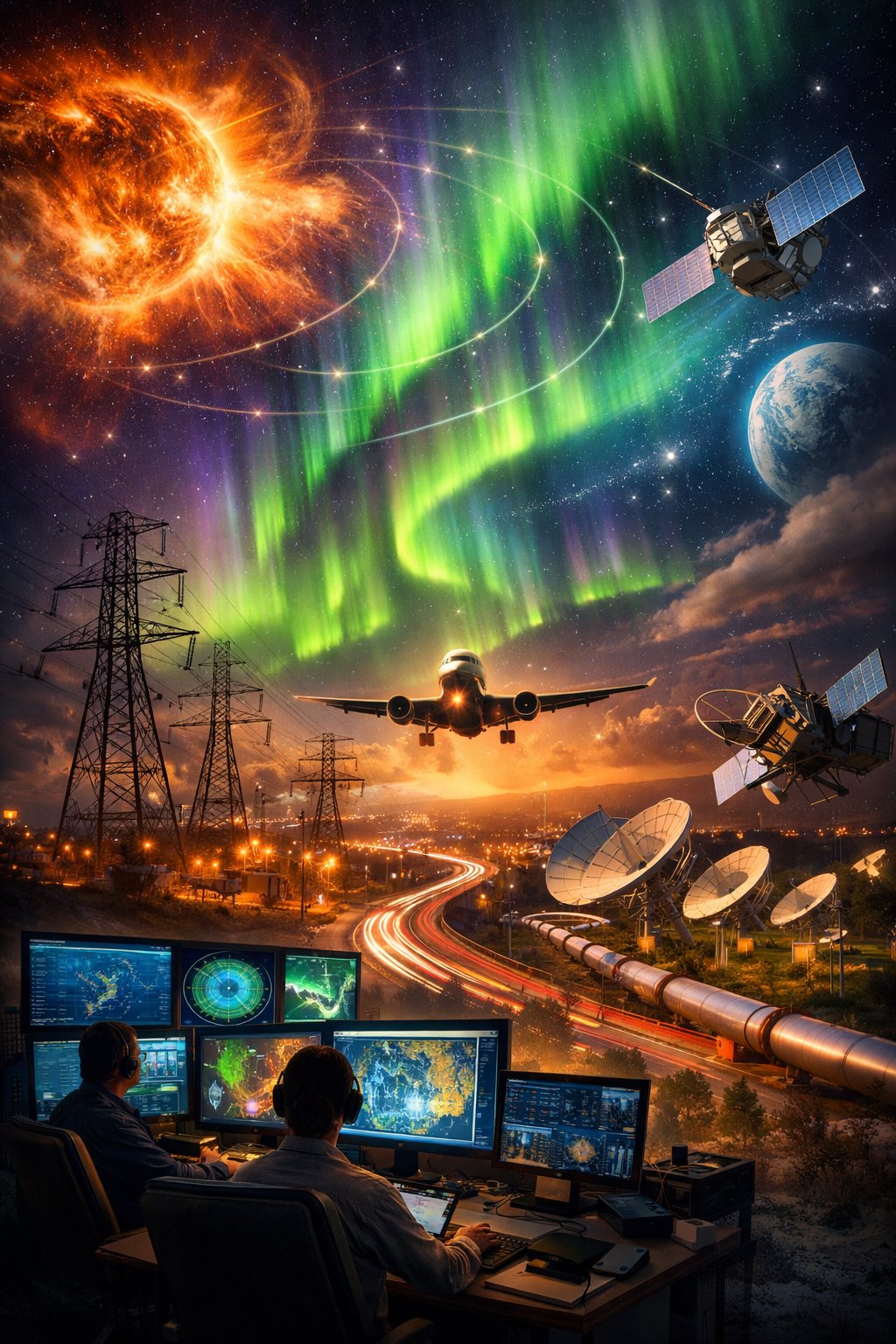
Geomagnetic activity in the USA matters because it affects multiple critical systems simultaneously. A single strong geomagnetic storm can influence aviation, energy distribution, emergency services, and digital communication.
Areas of concern include
National power grids and transformers
Satellite-based navigation systems
Military and civilian aviation
Financial and data transmission networks
Understanding these risks allows institutions to prepare, adapt, and reduce potential damage during periods of heightened solar activity.
Not all parts of the country experience geomagnetic activity in the same way. Latitude plays a major role, as regions closer to the poles are more exposed to geomagnetic fluctuations.
Northern states such as Alaska, Minnesota, North Dakota, and Maine often experience stronger effects. During intense geomagnetic storms, auroras can become visible much farther south, occasionally reaching the Midwest or even parts of the northern East Coast.
However, southern states are not immune. While visible auroras are rare, technological systems in these regions can still be affected by induced currents in long power lines and pipelines.
Geomagnetic activity in the USA poses a real challenge to modern infrastructure. High-voltage power lines can act as antennas, capturing geomagnetically induced currents that overload transformers.
Consequences may include
Voltage instability
Transformer damage
Temporary power outages
Increased wear on electrical components
At the same time, satellites orbiting Earth are exposed to heightened radiation during geomagnetic storms. This can degrade solar panels, disrupt onboard electronics, and shorten satellite lifespans.
“Modern civilization relies on technologies that are surprisingly sensitive to space weather, making geomagnetic activity a hidden but strategic risk.”
Because the USA depends heavily on satellite navigation and communication, even short disruptions can have wide-ranging effects.
Air travel across the United States is closely tied to geomagnetic conditions. High-latitude flights, especially those crossing polar routes, are particularly vulnerable during periods of elevated geomagnetic activity.
Airlines may take precautionary measures such as
Rerouting flights to lower latitudes
Limiting exposure time at high altitudes
Adjusting communication frequencies
Enhancing radiation monitoring for crews
GPS accuracy can also decline during geomagnetic disturbances, which affects not only aviation but also shipping, logistics, agriculture, and emergency response services across the country.
Beyond technology, geomagnetic activity in the USA is often discussed in relation to human health and behavior. While scientific research is ongoing, many people report increased sensitivity during geomagnetic storms.
Commonly mentioned effects include
Headaches or migraines
Fatigue and reduced concentration
Sleep disturbances
Heightened emotional sensitivity
Some studies suggest that geomagnetic fluctuations may influence the nervous and cardiovascular systems, especially in individuals with pre-existing conditions.
“The human body, like the planet itself, responds to subtle magnetic changes, even if we do not consciously perceive them.”
Although reactions vary widely, awareness of geomagnetic conditions can help people better understand changes in well-being.
The United States maintains advanced monitoring systems to track geomagnetic activity in real time. Magnetometers, satellites, and space-based observatories continuously measure solar emissions and magnetic field variations.
Monitoring allows experts to
Detect incoming solar disturbances
Estimate storm intensity and duration
Issue early warnings to critical sectors
Coordinate preventive measures nationwide
This proactive approach reduces vulnerability and helps maintain stability during periods of increased solar activity.
Preparation is key when dealing with geomagnetic activity in the USA. While individuals cannot control space weather, they can adapt their behavior and expectations during active periods.
Practical recommendations include
Reducing reliance on GPS for critical tasks
Protecting sensitive electronics with surge protection
Allowing for extra rest and hydration
Staying informed through official space weather alerts
For businesses and institutions, preparation involves redundancy, backup systems, and clear response protocols.