

Insomnia rarely arrives loudly. It does not knock on the door or announce itself with pain. Instead, it slips into the evening hours, settles between unfinished thoughts, and teaches the body to stay awake when the world goes dark. At first, it feels temporary. One bad night. Then another. Over time, sleeplessness becomes familiar, almost personal, as if night itself has changed its rules.
What makes insomnia especially deceptive is its gradual nature. A person adapts to short nights, convincing themselves that four or five hours of sleep is “enough.” Morning fatigue becomes normal, concentration weakens, emotions flatten, and the body lives in a constant state of quiet exhaustion. The danger is not only the lack of rest, but how easily the mind learns to accept it as normal.
Insomnia is not just about the absence of sleep. It is about tension, anticipation, and the silent fear of another restless night. To understand how to get rid of insomnia, we must first understand what feeds it and why it feels so persistent once it takes root.
Why the brain refuses to sleep
The human brain is not designed to fall asleep on command. Sleep is a biological consequence of safety, rhythm, and balance. When any of these elements are disturbed, the brain chooses wakefulness as a form of protection.
The overstimulated nervous system
Modern life keeps the nervous system in a constant state of alert. Screens glow late into the night, notifications never truly stop, and the mind learns to associate evening with activity rather than rest. Even after the lights are turned off, the nervous system may still behave as if it is midday.
Insomnia is often not a lack of tiredness, but an excess of vigilance.
When the nervous system does not feel safe enough to power down, sleep becomes shallow or disappears entirely. Muscles remain tense, breathing stays shallow, and the brain continues scanning for problems that do not exist. Over time, this state becomes habitual, making relaxation feel unfamiliar.

Emotional weight and hidden stress
Unprocessed emotions do not rest when the lights go out. They wait. Nighttime removes distractions, and thoughts grow louder. Worries replay themselves, regrets sharpen, and plans spiral forward into imagined futures.
This emotional load is one of the most underestimated causes of chronic insomnia. Even when life seems stable, unresolved inner tension can keep the nervous system activated. Sleep requires emotional permission to let go, and without it, the mind remains alert long after the body is tired.
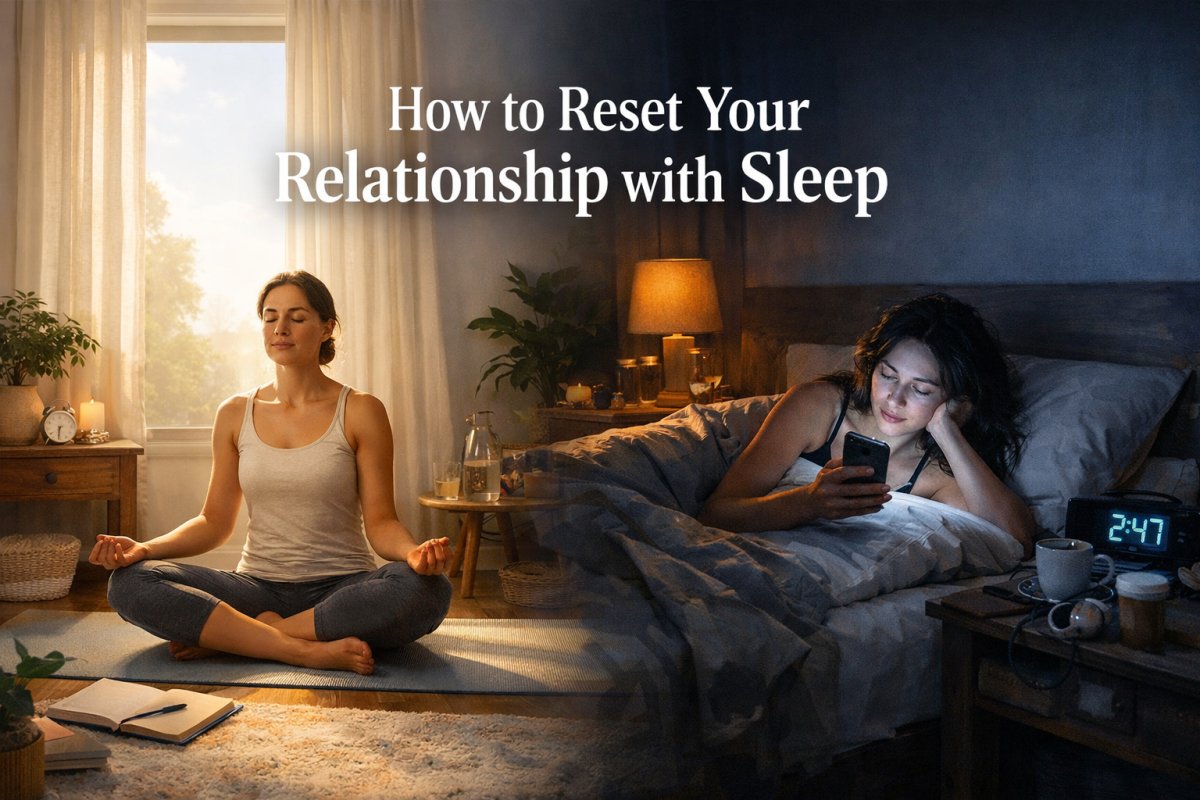
How to reset your relationship with sleep
Recovering from insomnia is not about forcing sleep to return. It is about changing the conditions that make sleep possible. This process is slow, gentle, and deeply physical.
Create a predictable evening rhythm
Sleep thrives on predictability. The body learns through repetition, not force. A consistent pre-sleep routine gently signals that the day is ending and no further effort is required.
Unnumbered list
-
Dimming lights one hour before bed
-
Avoiding stimulating conversations late in the evening
-
Replacing screens with calm, low-light activities
-
Going to bed at the same time even on weekends
These actions may seem insignificant on their own, but together they form a pattern the brain begins to trust. Over time, this rhythm reduces internal resistance and lowers evening anxiety.
Separate the bed from wakefulness
The bed should not be a place of struggle or frustration. When it becomes associated with effort, disappointment, or mental activity, the brain resists it instinctively.
Numbered list
-
Use the bed only for sleep and intimacy
-
If sleep does not come within 20 minutes, leave the bed calmly
-
Return only when drowsiness appears
-
Avoid clock-watching during the night
This approach may feel counterintuitive at first, but it retrains the brain to associate the bed with rest rather than pressure. Over time, lying down becomes a signal of safety instead of expectation.
The power of light and darkness
Light is one of the most powerful regulators of sleep. The body does not understand time by clocks, but by brightness and shadow.
Rebuilding circadian rhythm
The circadian rhythm is the internal clock that tells the body when to wake and when to sleep. Insomnia often reflects a rhythm that has lost its anchor due to irregular schedules or insufficient daylight exposure.
Morning light is not optional. It is medicine.
Daylight is the strongest signal your brain uses to schedule sleep at night.
Regular exposure to natural light early in the day teaches the brain when to begin preparing for sleep later. Without this signal, melatonin release becomes delayed, and falling asleep feels unnatural.
Evening darkness as therapy
Artificial light in the evening confuses the brain, especially when it comes from screens and overhead lighting. Blue wavelengths suppress melatonin and tell the brain to remain alert.
Creating darkness gradually, rather than abruptly, allows the nervous system to slow down organically. Soft lighting, shadows, and calm environments signal that the day is ending and rest is approaching.
Calming the mind before sleep
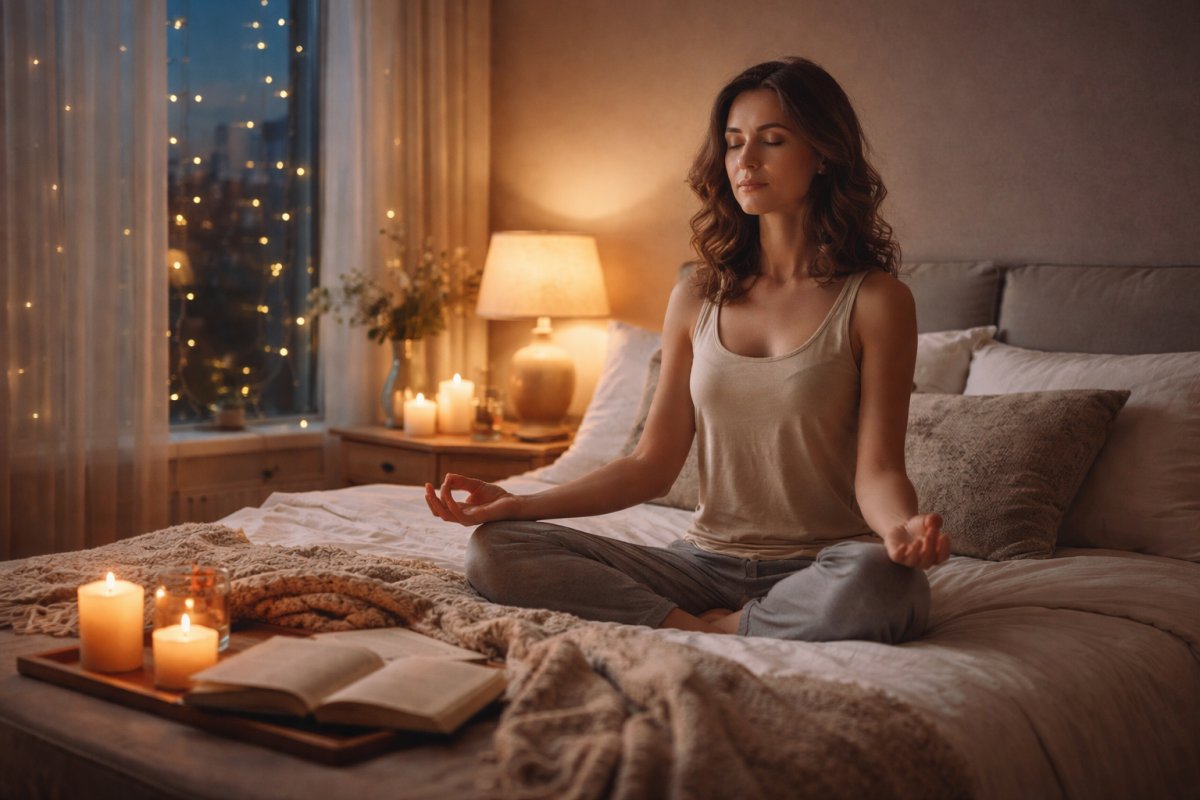
The mind does not respond well to commands like “stop thinking.” Sleep comes when mental activity loses importance, not when it is forcibly removed.
Letting thoughts pass without control
Trying to force the mind into silence often increases tension. Thoughts are not enemies. They are mental activity seeking attention.
Instead of engaging with them, allow them to pass without judgment. Observing thoughts without reacting reduces their emotional charge and slowly quiets mental noise.
Breathing as a bridge to sleep
Breathing is one of the few direct ways to influence the nervous system. Slow breathing sends a clear signal of safety.
Unnumbered list
-
Inhale slowly through the nose
-
Extend the exhale longer than the inhale
-
Focus on the sensation of air leaving the body
-
Continue for several minutes without urgency
This simple practice shifts the body from alertness to rest. Sleep often follows not because breathing causes it, but because tension fades.
Nutrition and substances that affect sleep
Sleep quality is shaped throughout the day. Evening habits often reveal patterns created much earlier.
What to avoid in the evening
Many substances interfere with sleep while pretending to help.
Numbered list
-
Caffeine after early afternoon
-
Alcohol as a sleep aid
-
Heavy meals close to bedtime
-
Excess sugar late in the day
Alcohol may cause drowsiness, but it disrupts deep sleep cycles and increases nighttime awakenings. The result is lighter sleep and early fatigue.
Supporting sleep through nourishment
The nervous system depends on stable energy and adequate nutrients.
Unnumbered list
-
Magnesium-rich foods
-
Warm, light evening meals
-
Adequate protein during the day
-
Stable blood sugar levels
When the body feels nourished and balanced, it becomes easier to let go into sleep without resistance.
When insomnia becomes chronic
Chronic insomnia is not just a sleep problem. It is a learned pattern reinforced by fear and expectation.
Breaking the fear cycle
Fear of not sleeping is one of the strongest activators of wakefulness. The more importance placed on sleep, the harder it becomes to reach.
The moment sleep becomes a goal, it often disappears.
Letting go of pressure, even temporarily, often brings relief. Paradoxically, sleep returns when it is no longer chased.
When to seek professional support
If insomnia persists for months and interferes with daily life, professional guidance can help uncover deeper mechanisms. Structured approaches focused on behavior and nervous system regulation often bring lasting results.
Seeking help is not a weakness. It is an informed decision to restore health.
A gentler way back to rest
Getting rid of insomnia is not about defeating the night. It is about rebuilding trust between the body and darkness. Sleep returns when safety replaces vigilance, and rhythm replaces chaos.
Insomnia taught the nervous system to stay awake. With patience and consistency, it can be taught to rest again. Sleep is not something we force into existence. It is something that arrives when we finally allow ourselves to let go.