
Understanding geomagnetic phenomena
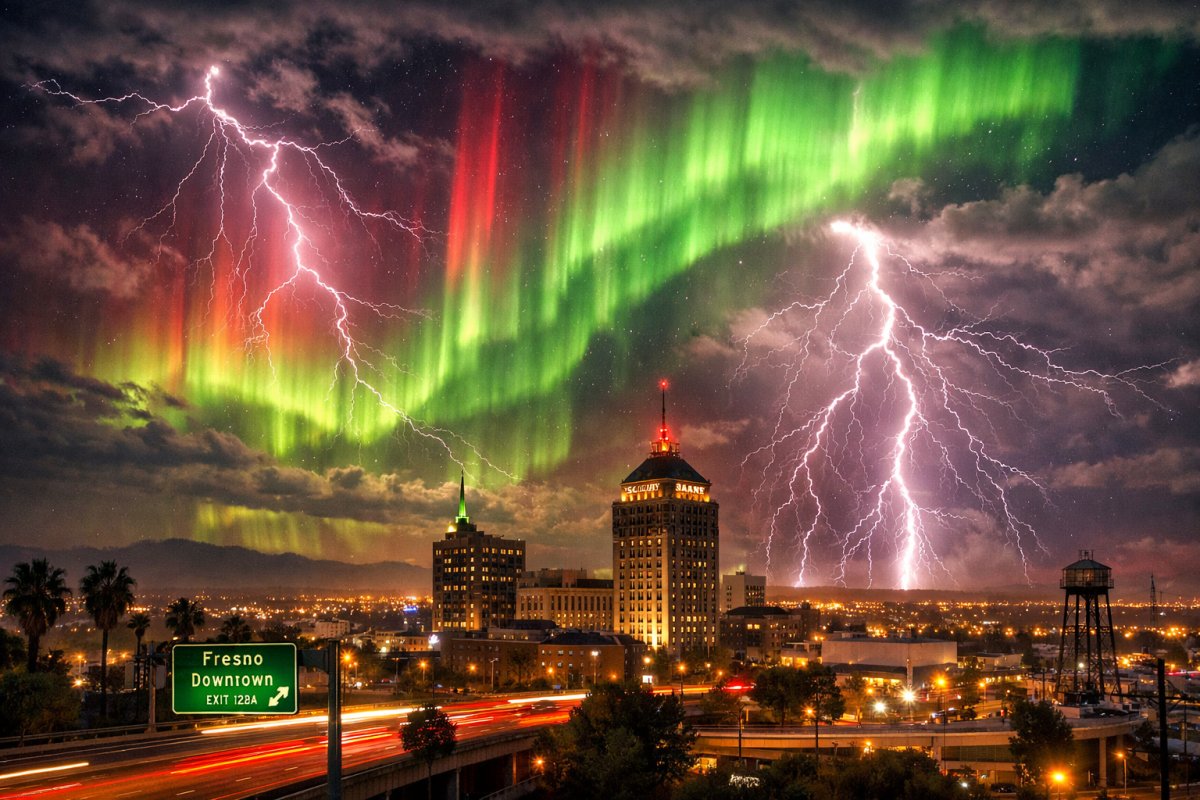
Beneath the perpetual golden embrace of the San Joaquin Valley sun, an unseen cosmic drama occasionally unfolds, a celestial ripple effect extending billions of miles to touch the tranquil farmlands and bustling streets of Fresno. Magnetic storms, often perceived as distant spectacles of the polar regions, cast a more nuanced, yet potent, influence even here, far from the auroral glow. These events are not violent terrestrial tempests but rather energetic disturbances in Earth's protective magnetic field, triggered by the tumultuous activity of our star.
Solar origins and earth's shield
The genesis of a geomagnetic storm lies deep within the sun's fiery core and its dynamic surface. Solar flares, immense bursts of radiation, and coronal mass ejections (CMEs), which are colossal expulsions of plasma and magnetic field from the sun's corona, are the primary culprits. When directed towards Earth, these streams of charged particles journey through interplanetary space, eventually colliding with our planet's magnetosphere-a vast, invisible magnetic bubble that deflects most of the solar onslaught. It is this cosmic interaction, a powerful handshake between solar wind and planetary defense, that perturbs our magnetic field, manifesting as a geomagnetic storm.
The sun, our life-giver, is also a volatile star, capable of unleashing torrents of charged particles that journey across the void, eventually encountering our planetary defenses.
The intensity and duration of these storms vary greatly, from minor disturbances to severe events that can ripple across global systems. While the dazzling aurora borealis and australis are the most visually striking manifestations at high latitudes, the impacts on lower latitudes like Fresno are more insidious, often unseen yet profoundly impactful on our technologically reliant society.
The k-index and its significance
To quantify the global level of geomagnetic activity, scientists use a scale known as the Kp-index. Ranging from 0 to 9, with 0 indicating very quiet conditions and 9 signifying an extreme geomagnetic storm, this index provides a crucial metric for understanding space weather. A Kp value of 5 or higher generally designates a geomagnetic storm. For a city like Fresno, far from the magnetic poles, even moderate Kp levels can subtly influence systems designed with precision and uninterrupted operation in mind.
Invisible impacts on the central valley
While Fresno residents are unlikely to witness a vibrant aurora overhead, the city and its surrounding agricultural heartland are not immune to the far-reaching tendrils of a geomagnetic storm. The invisible forces at play can ripple through various facets of modern life, impacting critical infrastructure and even potentially influencing biological systems.
Technology and infrastructure
The highly interconnected nature of Fresno's infrastructure and its reliance on advanced technology make it susceptible to space weather events. One of the most significant concerns for the Central Valley's agricultural industry is the precision of GPS systems. Modern farming relies heavily on GPS for accurate planting, irrigation, and harvesting, where deviations of even a few feet can mean significant economic losses. Geomagnetic disturbances can disrupt satellite signals, leading to GPS inaccuracies.
While the visual spectacle of an aurora remains a rarity for Fresno's skies, the silent hum of technology, from precision agriculture to critical infrastructure, can subtly feel the tremor of a strong geomagnetic event.
Beyond agriculture, power grids are also vulnerable. Rapid changes in Earth's magnetic field can induce geomagnetically induced currents (GICs) in long conductors, like power lines and pipelines. While high-latitude regions are at greater risk of widespread blackouts, even at Fresno's latitude, strong storms could potentially stress local transformers or components, leading to localized outages or equipment damage. Furthermore, radio communication, vital for emergency services, aviation, and even everyday consumer devices, can experience interference or blackouts during significant space weather events, making reliable communication a challenge when it is needed most.
Biological sensitivities
The full extent of geomagnetic storms on biological systems, particularly humans, remains an active area of scientific inquiry. However, anecdotal evidence and some studies suggest that strong geomagnetic activity might influence various biological processes. Migratory animals, such as birds and fish, are known to use Earth's magnetic field for navigation, and disruptions could potentially disorient them.
For humans, some researchers have explored correlations between geomagnetic storms and reported shifts in mood, sleep patterns, or even physiological responses, though these links are generally subtle and require extensive further investigation. In the serene setting of Fresno, the impact might be an almost imperceptible undercurrent, influencing the delicate balance of life without overt signs.
Monitoring space weather
Understanding and forecasting space weather is paramount for mitigating its potential impacts. Observatories and satellites continuously monitor the sun and the space environment between the sun and Earth, providing critical data for predictions and real-time assessments.
Key geoactivity parameters
Several key parameters are used by space weather forecasters to gauge the intensity and potential impact of geomagnetic activity:
| Parameter | Description | Typical Impact Indicator |
|---|---|---|
| Kp-index | Global geomagnetic activity level over a 3-hour period | 0-9 scale, 5+ signifies a storm |
| Bz (Interplanetary Magnetic Field) | North/South orientation of the magnetic field carried by the solar wind | Strong and prolonged southward (-Bz) orientation significantly enhances storm strength |
| Solar Wind Speed | Velocity at which charged particles travel from the sun | Higher speeds (e.g., > 500 km/s) can lead to more intense storms |
| Proton Density | Concentration of protons in the solar wind plasma | Increased density (> 10 particles/cm³) can contribute to stronger geomagnetic disturbances |
Understanding these cosmic metrics allows scientists to predict and prepare for the invisible ripples that propagate from the sun's fiery surface to our planetary doorstep.
These parameters, along with others, form the backbone of space weather forecasting, enabling agencies like NOAA's Space Weather Prediction Center (SWPC) to issue alerts and warnings, giving industries and critical infrastructure operators time to prepare.
Mitigating potential disruptions in fresno
For a vibrant urban and agricultural center like Fresno, preparedness for geomagnetic storms revolves around awareness and resilience, particularly in sectors heavily reliant on technology and continuous service.
Awareness and preparedness
- Monitoring space weather forecasts Regularly checking updates from reputable sources like NOAA SWPC helps to anticipate potential disruptions.
- Strengthening infrastructure Utility companies and communication providers can implement measures to harden their systems against geomagnetically induced currents and signal interference.
- Backup and redundancy For critical agricultural operations, having backup navigation methods or manual overrides for precision equipment can safeguard against GPS outages.
- Public education Raising awareness among the general public and specific industries in Fresno about the nature and potential effects of space weather can foster a more resilient community.
In an increasingly interconnected world, where our daily lives depend on satellite signals and stable power grids, a proactive awareness of space weather is no longer merely an academic pursuit but a practical necessity.
By understanding the subtle yet significant ways in which solar activity can impact life in the San Joaquin Valley, Fresno can better prepare for and navigate the cosmic forces that occasionally reach its sun-drenched landscape.
The unique fresno perspective
From sun-drenched fields to subtle shifts
Fresno, a city synonymous with agricultural bounty and abundant sunshine, presents a compelling tableau for contemplating the hidden influence of magnetic storms. Here, the drama is not painted across the sky in vibrant auroral hues but felt in the imperceptible tremor of a GPS signal, the whispered challenge to a power grid, or the unquantified subtle shifts in biological rhythm. It underscores the profound interconnectedness of our planet with the vast, dynamic cosmos.
The narrative of magnetic storms in Fresno is one of invisible forces, of cosmic ripples affecting the highly calibrated gears of human endeavor. It is a reminder that even in a place seemingly untouched by polar phenomena, the sun's distant breath can still shape our technological landscape and subtly touch the fabric of daily life, urging us to look beyond the obvious and appreciate the intricate dance of universal energies.