
Understanding cosmic winds
From the sun's fiery heart, invisible currents of energy relentlessly stream across the vast expanse of space, often benign, yet sometimes coalescing into formidable magnetic storms. These celestial tempests, born millions of miles away, ultimately find their way to Earth, where their subtle influence can ripple through our atmosphere and the technological frameworks that define modern existence. For residents of Colorado Springs, a city uniquely positioned at the gateway to the Rocky Mountains and deeply connected to space-faring endeavors, understanding these phenomena transcends mere scientific curiosity; it becomes an integral part of comprehending the broader cosmic environment.
Solar eruptions and their terrestrial echo
The genesis of a magnetic storm lies within the dynamic and turbulent surface of our sun. Violent expulsions of plasma and magnetic fields, known as Coronal Mass Ejections (CMEs), or powerful bursts of radiation, solar flares, are the primary culprits. When these colossal events direct their energetic payloads towards Earth, they unleash a torrent of charged particles traveling at astounding velocities. It is this cosmic onslaught that initiates the complex interplay between the sun's fury and our planet's intrinsic defenses.
"The sun's temper tantrums ripple across the void, an ancient cosmic drumbeat echoing on our modern shores."
Not every solar eruption poses a threat; the solar wind itself is a constant flow. However, CMEs and significant flares represent supercharged gusts within this cosmic breeze. When they collide with Earth's magnetosphere, the planet's protective magnetic bubble, a spectacular and powerful interaction begins, leading to what we perceive as a magnetic, or geomagnetic, storm. The journey from the sun to Earth can take anywhere from a few hours to several days, providing a crucial window for prediction and preparation.
The earth's magnetic shield
Our planet is encircled by an invisible, yet immensely powerful, magnetic field, generated by the molten iron core deep within. This magnetosphere acts as a formidable shield, deflecting the majority of harmful charged particles from the solar wind and cosmic rays. During a magnetic storm, however, this shield is tested. The incoming plasma from a CME compresses the magnetosphere on the sunward side, stretching it into a long tail on the night side.
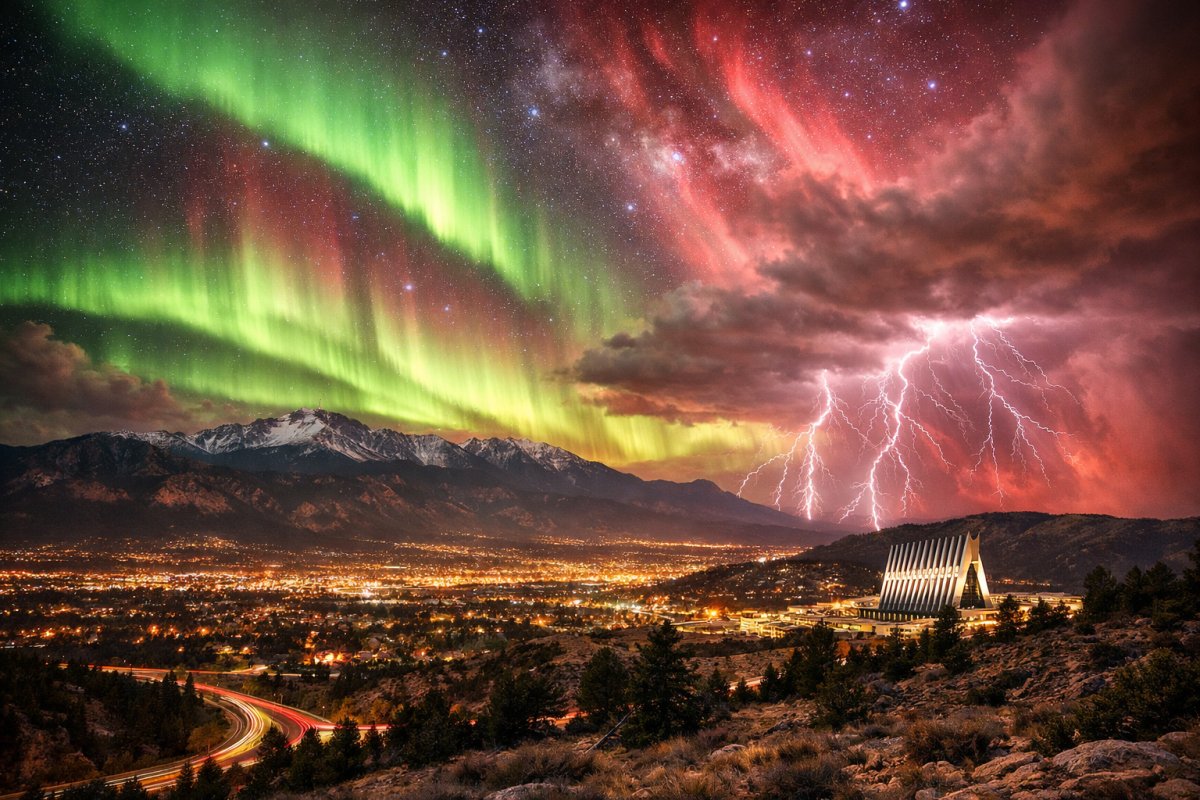
As magnetic field lines reconnect and energy is released, it sends cascades of charged particles hurtling down into the upper atmosphere, primarily near the polar regions. This energy transfer is the root cause of the various effects observed during a geomagnetic storm, from the ethereal glow of auroras to disruptions in sophisticated technological systems.
Colorado Springs a unique vantage point
Colorado Springs, with its elevation above 6,000 feet and its distinct atmospheric conditions, offers a particular perspective on space weather phenomena. While the city is too far south for frequent, vibrant aurora displays, strong magnetic storms can occasionally paint the northern skies with faint, elusive colors, a rare and cherished sight for local skywatchers. The city's clear mountain air, often free from light pollution found in denser urban centers, enhances the potential for glimpsing these distant cosmic echoes.
Altitude and clear skies
The elevated position of Colorado Springs, set against the dramatic backdrop of the Rocky Mountains, contributes to its generally clearer and less humid atmosphere compared to many other regions. This natural advantage not only provides breathtaking panoramic views but also offers an improved vantage point for observing astronomical events, including the subtle manifestations of geomagnetic activity. While not an equatorial observatory, the city's altitude brings it a step closer to the cosmic canvas, allowing for a more pristine view of the night sky when conditions align.
"Nestled at the foot of Pikes Peak, Colorado Springs offers an uncommon clarity to celestial events, even the subtle ones."
This clarity extends beyond mere visual appreciation; it speaks to a broader connection with the dynamic processes occurring in the upper atmosphere. The ionosphere, a critical layer of Earth's atmosphere that interacts profoundly with incoming solar radiation and charged particles, is directly influenced by geomagnetic storms. For a region that values its natural beauty and its scientific institutions, this environmental characteristic adds another layer of appreciation for the powerful forces at play above.
The aurora borealis a rare spectacle
For most residents of Colorado Springs, the aurora borealis, or Northern Lights, remains a phenomenon associated with much higher latitudes. However, during particularly intense geomagnetic storms, when the Kp-index, a measure of global geomagnetic activity, reaches extreme levels, the aurora can extend its reach southward. While it might appear as a faint, diffuse glow rather than the vibrant, dancing curtains seen in the Arctic, the possibility of witnessing such a spectacle from the Pikes Peak region is a thrilling testament to the power of solar-terrestrial interaction.
- Vivid displays often require Kp-index values of 7 or higher
- The optimal viewing typically occurs further north
- Elevated geomagnetic activity enhances visibility even at lower latitudes
Such events serve as profound reminders that our terrestrial home is inextricably linked to the broader cosmos, subject to the whims and energies of our nearest star. The potential for a fleeting glimpse of the aurora transforms the scientific understanding of magnetic storms into a deeply personal and awe-inspiring experience for those fortunate enough to witness it.
Impacts on modern life
Beyond the captivating visual displays, magnetic storms carry the potential for significant disruption to the intricate technological infrastructure that underpins contemporary society. As these powerful bursts of energy interact with Earth's magnetic field, they induce electric currents in the ground and disrupt the ionosphere, leading to a cascade of potential issues for systems reliant on stable electromagnetic conditions. For a technologically advanced region like Colorado Springs, these vulnerabilities are a point of careful consideration.
Technological vulnerabilities
One of the most immediate and widespread impacts of a severe magnetic storm is on satellite operations. GPS signals can become degraded or entirely lost, affecting everything from navigation systems to precision agriculture and financial transactions. Communication satellites, critical for global connectivity, can experience disruptions, leading to outages in television, internet, and phone services. Furthermore, orbiting spacecraft themselves are vulnerable to increased radiation doses, potentially damaging sensitive electronics and reducing their operational lifespan.
"An invisible wave can disrupt the digital fabric of our lives, reminding us of our intricate dependence on technology."
Aviation is also affected, as high-frequency radio communications, essential for transatlantic and transpolar flights, can be interrupted. Moreover, astronauts aboard the International Space Station and those venturing into deep space face heightened radiation exposure, necessitating protective measures and contingency plans. The intricate web of our digital age, reliant on signals traversing the ionosphere and space, finds its delicate balance challenged by these cosmic disruptions.
Infrastructure at risk
Perhaps the most significant terrestrial threat posed by intense magnetic storms is to ground-based power grids. Geomagnetically Induced Currents (GICs) can flow through long conductors, such as power transmission lines, causing transformers to overheat and potentially fail. This can lead to widespread power outages, ranging from localized blackouts to regional grid collapse. Such an event would have profound socioeconomic consequences, impacting critical services, transportation, and daily life for millions. While the Rocky Mountain region and Colorado Springs benefit from a robust infrastructure, no modern grid is entirely immune to the extreme forces of a severe space weather event.
Other infrastructure elements also face risks. Pipelines can experience accelerated corrosion due to GICs, while railroad signaling systems may suffer interference. Even long-distance underground cables, part of the backbone of global communication, are not entirely impervious to these induced currents. The awareness of these vulnerabilities drives ongoing research and mitigation efforts, emphasizing the need for continuous monitoring and preparedness strategies.
Monitoring the invisible threat
Given the potential for widespread disruption, continuous monitoring of space weather is paramount. Scientists and agencies worldwide collaborate to track solar activity and predict the arrival and intensity of magnetic storms. For Colorado Springs, with its strong ties to national security and space operations, this monitoring takes on an added layer of significance, ensuring the readiness of critical systems and personnel.
Space weather forecasts
Much like terrestrial weather forecasts, space weather predictions rely on a network of observatories, satellites, and sophisticated models. Satellites positioned between the sun and Earth provide early warnings of CMEs and solar flares, measuring solar wind speed, density, and magnetic field orientation (particularly the Bz component, which dictates how effectively solar energy couples with Earth's magnetosphere). Ground-based magnetometers continually measure changes in Earth's magnetic field, providing real-time data on geomagnetic activity. These various data streams are synthesized to provide forecasts that alert industries and governments to impending space weather events, allowing for preparatory actions.
The National Oceanic and Atmospheric Administration (NOAA) Space Weather Prediction Center (SWPC) is a key player in this global effort, issuing watches, warnings, and alerts that categorize magnetic storms by severity. These alerts are crucial for operators of power grids, airlines, satellite systems, and emergency services, enabling them to implement protocols to protect their assets and ensure public safety.
Key geomagnetic parameters
Understanding space weather relies on several key parameters that quantify the intensity and potential impact of geomagnetic activity. These metrics provide a common language for scientists and engineers to assess risk and communicate the severity of a magnetic storm. For the uninitiated, familiarizing oneself with these terms can demystify space weather reports and enhance personal preparedness.
| Parameter | Description | Impact |
|---|---|---|
| Kp-index | Global geomagnetic activity index ranging from 0 (quiet) to 9 (extreme storm) | Primary indicator of storm intensity, correlates with aurora visibility and power grid stress |
| Bz component | Interplanetary magnetic field (IMF) orientation, measured in nanoteslas (nT) | Crucial for magnetosphere coupling; a strong southward (negative) Bz enhances storming significantly |
| Solar wind speed | Velocity of charged particles from the sun, measured in kilometers per second (km/s) | Higher speeds lead to more forceful impacts on the magnetosphere |
| Proton flux | Density of energetic protons, measured in particles per square centimeter per second (pfu) | Indicates radiation risk for satellites, spacecraft, and high-altitude aviation |
| Dst index | Disturbance Storm Time index, measures ring current intensity in nanoteslas (nT) | Reflects the global intensity of a magnetic storm, especially its impact on Earth's equatorial magnetic field |
These parameters, when monitored in real-time, provide a comprehensive picture of the dynamic conditions in near-Earth space, informing decisions that protect critical infrastructure and foster resilience in the face of powerful solar events.
Personal experience and preparation
While the scientific complexities of magnetic storms can seem remote, their potential to affect daily life brings the phenomenon closer to home. For individuals in Colorado Springs, understanding space weather can transition from abstract concept to practical knowledge, empowering a sense of preparedness and connection to the larger cosmic rhythm. The allure of the heavens, often observed from serene mountain vistas, becomes intertwined with a pragmatic awareness of cosmic forces.
Beyond the science a human perspective
For many, the most direct experience of a magnetic storm, if strong enough, would be the fleeting glimpse of an aurora. Such an event, rare in Colorado Springs, imbues the scientific explanation with a sense of wonder and personal connection. It reminds us that despite our urbanized existence, we remain inhabitants of a dynamic planet, enveloped by the sun's powerful emanations. Observing these subtle shifts in the sky, or even just being aware of the invisible forces at play, fosters a deeper appreciation for the intricate cosmic dance that governs our world.
"The very air we breathe hums with silent energies, a subtle reminder of our place within a grander cosmic narrative."
Beyond the visual spectacle, an awareness of space weather can influence how we view our technological reliance. A power outage caused by a geomagnetic storm is not merely a malfunction; it is a direct consequence of a celestial event, transforming an inconvenience into a tangible link with the universe beyond Earth. This perspective encourages a more holistic understanding of our environment, where terrestrial and extraterrestrial forces are inextricably linked.
Mitigating the effects
While large-scale mitigation efforts against severe magnetic storms are primarily the responsibility of utility companies and governmental agencies, individuals can also take steps to enhance their preparedness. Much like preparing for a severe winter storm or a localized power outage, a thoughtful approach to space weather can minimize personal inconvenience and bolster community resilience.
- Stay informed via space weather alerts from reputable sources like NOAA SWPC
- Have a basic emergency kit, including flashlights, a battery-powered radio, and chargers
- Protect sensitive electronics by unplugging them during severe storm warnings if feasible
- Understand the potential for GPS and radio communication disruptions and have alternative navigation or communication methods if essential
Embracing a proactive mindset ensures that residents of Colorado Springs, and indeed anywhere on Earth, can navigate the occasional cosmic disruptions with confidence and a deeper appreciation for the magnificent and sometimes turbulent cosmos that surrounds us.